Air conditioning for a house with no ductwork: high-velocity or ductless, and how to actually decide
Two real ways to cool a house that was never built for ducts, and the questions that actually decide which one is right for yours.
September 16, 2026 · 4 min read
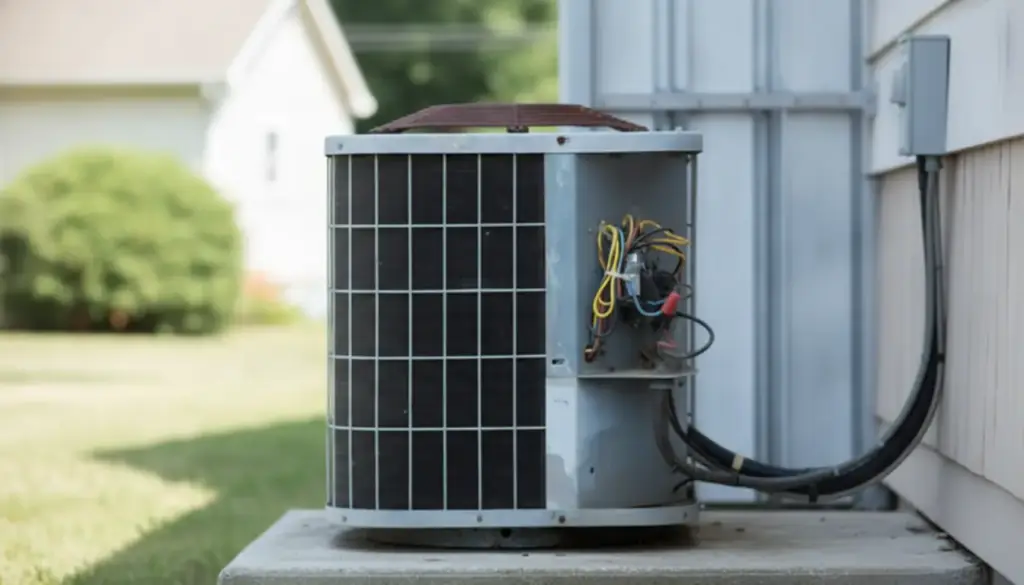
Most of the housing stock in this county went up long before central air was a standard feature, which means the framing has no chases built in for large sheet metal ducts. Plaster walls, low basement ceilings, and closets stacked on top of each other in ways that made sense in 1920 but not for running twelve inch trunk lines. That does not mean whole-house cooling is out of reach. It means the two real options for a house like this are high-velocity mini-duct and ductless mini splits, and picking between them is a question about the house, not a question about which one is newer.
How high-velocity mini-duct actually works
A high-velocity system, the kind we install as a Unico-certified installer, moves air through small flexible supply tubing, roughly two inches across, rather than the wide rigid ductwork a conventional system needs. That tubing threads through wall cavities, joist bays and closets you already have, coming out at small round outlets instead of large floor or ceiling registers. The air comes out fast and mixes hard with the room air, which is part of why these systems dehumidify well and even out hot and cold spots in an old house better than a lot of people expect. The tradeoff is that it is still ductwork, just small ductwork, and it still needs a return path and an air handler with somewhere to sit, usually an attic or a mechanical closet.
How ductless mini splits work, and where they actually win
A ductless system skips ducting altogether. Each indoor head, wall mounted or ceiling cassette, connects back to an outdoor condenser through a small refrigerant line set run through a wall penetration, not through the framing. That makes ductless the right answer for an addition with no attic access above it, a single room that runs hot, a converted garage, or a house where running any tubing through the walls is simply not practical. The visible indoor unit is the real tradeoff. Some homeowners do not mind it at all; others find it changes the look of a finished room more than they expected.
What actually decides between them
- How many rooms need conditioning, and whether they are close enough together to share one air handler
- Whether there is usable attic or joist bay space to thread supply tubing through
- Whether the homeowner is comfortable with a visible wall unit or ceiling cassette in the room
- Whether whole-house dehumidification matters, since mini-duct handles that more evenly than most ductless setups
- Budget, since a mini-duct install generally costs more up front for a fully hidden result
Why the certification is not a formality
High-velocity is not a beginner install. The supply tubing has to be run and terminated correctly, static pressure has to be calculated so the air handler is not fighting itself, and outlet placement has to actually account for how the room is used, not just where a stud bay happens to be open. The Unico certification means the training was done specifically for this equipment, not adapted from a conventional duct job. That matters most in the rooms where a mistake is hardest to fix after the drywall goes back up.
Heat pumps: cooling and heating from the same outdoor unit
Both high-velocity and ductless systems can be built around a heat pump instead of a straight air conditioner, which means the same equipment that cools the house in July can also provide supplemental heat in the shoulder seasons by running the refrigerant cycle in reverse. In a house already heated by a boiler, a heat pump is not usually a replacement for the hydronic system, it is a way to get the cooling installed without adding an air conditioner that only earns its keep three months a year. Whether that tradeoff makes sense depends on how the rest of the house is heated and how the electric rates compare to what you already pay for oil or gas.
What installation day actually looks like
A high-velocity retrofit takes longer than a ductless install because the tubing has to be fished through finished walls and ceilings, usually with small access holes patched afterward rather than open demolition. A ductless install is faster, mostly limited to the wall penetration for the line set and mounting brackets for the indoor heads. Neither one requires tearing a house apart the way people sometimes assume when they hear the word retrofit, but it is worth asking upfront how many access points each option needs and how the patching and paint touch-up will be handled before the crew shows up.
The honest tradeoff
Mini-duct costs more to install and takes longer, because it is genuinely more work to thread tubing through an old house correctly. What you get back is a hidden system with no visible indoor units and better whole-house humidity control. Ductless is faster, often cheaper per room, and the only realistic option in spaces with no accessible framing at all, at the cost of a visible unit on the wall. Neither one is the correct answer for every house in this county, which is exactly why we look at the actual framing and the actual rooms before recommending either.
Dan's Heating & Cooling Inc., 518-339-6534
Call 518-339-6534More articles
A boiler is a twenty year decision. Here is what actually makes one last that long.
Cast iron, near-boiler piping and hard well water do more to decide a boiler's lifespan than the sticker on the front of it.
Radiators, baseboard or radiant: what actually heats an old Columbia County house
Three ways to deliver heat from a boiler, and what each one is actually like to live with once the installer has left.