A boiler is a twenty year decision. Here is what actually makes one last that long.
Cast iron, near-boiler piping and hard well water do more to decide a boiler's lifespan than the sticker on the front of it.
September 16, 2026 · 3 min read
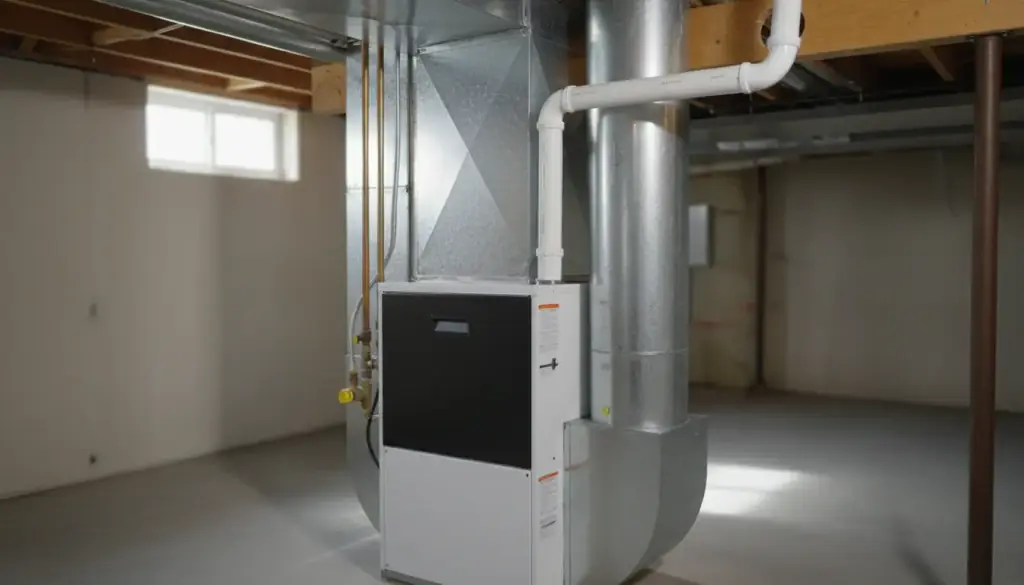
Ask anyone who has replaced a heating system twice in fifteen years what they would do differently, and the answer is almost always the same. They would have looked harder at what was inside the box the first time. A boiler is not a five year appliance and it is not a style choice for the basement. It is the one piece of equipment in a Columbia County house that gets asked to run for months at a stretch through a real winter, and the difference between a boiler still quietly working in year eighteen and one being pulled out in year seven usually comes down to a short list of things that have nothing to do with the thermostat on the wall.
What actually wears a boiler out
Two things end a boiler's working life early: the heat exchanger and the water running through it. Every time a boiler fires and then shuts off, the metal in the heat exchanger heats up and cools down. That cycling is normal, but a system that is oversized for the house, or that is forced to short cycle because the zoning was never set up right, puts the exchanger through far more of those cycles than a given winter should ask of it. Cast iron sectional boilers tolerate this reasonably well, which is part of why they were the standard in this part of the state for so long. Steel and aluminum heat exchangers, the kind in most modern high efficiency condensing boilers, are less forgiving of bad water and less forgiving of short cycling.
Why the piping around the boiler matters as much as the boiler itself
A boiler that is correctly piped, with proper near-boiler piping, a working expansion tank, and isolation valves in the right places, can be serviced without draining the entire system and diagnosed quickly when something starts acting up. A boiler that was piped fast to get a job closed costs its owner years of service life even when the appliance itself is a good one. This is the part of an install nobody asks to see photographs of, and it is the part that decides whether year twelve is a routine service call or a full system replacement.
Well water changes the math
A lot of houses in Columbia and Rensselaer Counties are on well water, and well water varies a great deal from one property to the next. Hard water leaves scale inside a heat exchanger the same way it leaves scale on a kettle element, and scale acts as an insulator. A boiler working through scale has to run hotter to deliver the same heat to the house, which shortens its life and raises the gas or oil bill at the same time. If your water tests hard, dealing with that at the mechanical room, not only at the kitchen tap, is part of protecting what you just paid for.
Why we put in Viessmann and Buderus
We install Viessmann and Buderus boilers because they are built to outlast a conventional heating system. You are not looking at replacing the whole plant every five to seven years the way some of your neighbors have. That is not a claim about anything mysterious happening inside the box. It is a heavier, more carefully engineered heat exchanger, tighter manufacturing tolerances, and a design that tolerates the realities of a real installation better than a bargain unit does. Paired with correct near-boiler piping and reasonable water quality, that combination is what a twenty year service life actually looks like in practice, not in a brochure.
What to ask before you replace, not just before you buy
- Has the near-boiler piping and expansion tank been inspected, or only the boiler itself?
- Has the house's water been tested for hardness in the last few years?
- Is the current system actually sized to the house's real heat loss, or just matched to whatever was there before?
- Are the zones set up the way the house is used today, or the way it was divided decades ago?
- Does the boiler have an actual service history, or has it only ever been touched when something failed?
None of those questions have much to do with the sticker price of a new unit, and every one of them decides whether the next boiler in that basement lasts eight years or twenty. A boiler is one of the few decisions in a house you genuinely want to make only twice in your working life. Getting the parts you cannot see right the first time is what makes that possible.
Dan's Heating & Cooling Inc., 518-339-6534
Call 518-339-6534More articles
Air conditioning for a house with no ductwork: high-velocity or ductless, and how to actually decide
Two real ways to cool a house that was never built for ducts, and the questions that actually decide which one is right for yours.
Radiators, baseboard or radiant: what actually heats an old Columbia County house
Three ways to deliver heat from a boiler, and what each one is actually like to live with once the installer has left.